 Beer Infinity Beer, Brewing & Beyond
|
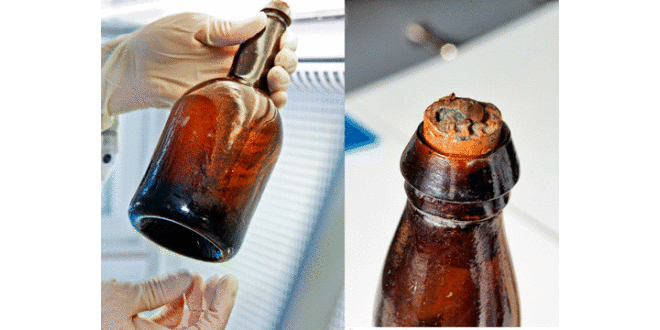
I got an email yesterday alerting me to this technical paper of analyses done on 19th century beer recovered from a shipwreck. Interestingly, they have no idea what the provenance of the ship was–nor, therefore, any idea where the beers came from. But when they cracked two of the bottles open, this is what they found. Bubbles of gas, presumably CO2, formed during sampling, producing a light foam. Both beers were bright golden yellow, with little haze. Both beers smelt of autolyzed yeast, dimethyl sulfide, Bakelite, burnt rubber, over-ripe cheese, and goat, with phenolic and sulfury notes. As the samples warmed to room temperature, the smell of hydrogen sulfide disappeared and that of butyric acid (particularly strong in C49) strengthened. Hmm, those don’t sound like particularly inviting qualities. Some of this was the result of time (autolyzed yeast, goat and cheese), but I’ve never heard of DMS or butyric acid developing in aged beer. Sounds to me like bad beer to begin with. I w … |
Source: Beervana
Read the full article here.
